


What's The Difference? Topstitch, Stay Stitch, & Understitch

Three essential techniques every sewist should have in their toolkit; and exactly when (and why) to use each one
Sewing is one of the most creative and rewarding crafts out there— but between the terminology and the techniques, it can get a little overwhelming. If you've ever squinted at a pattern and wondered, "Wait, is this a stay stitch or an understand?" ... this post is for you. We're breaking down three of the most commonly used stitching techniques, explaining what each one does, and walking you through exactly how to do them. Whether you're a total beginner or someone who just needs a refresher, let's stitch this out together!
✦ Quick Reference Guide ✦
Topstitch
A decorative and/or functional visible line of stitching on the right side of the fabric.
How To
Straight, zigzag, or decorative stitch along a seam or edge. Try contrasting thread!
Understitch
Stitching that keeps a facing or lining flat on the inside so it doesn't flip to the right side.
How To
Sew the facing to the seam allowance ~⅛ inch from the seam. Invisible from the outside.
Stay Stitch
A single line of stitching just inside the seam allowance to prevent stretching or distortion.
How To
Sew a straight stitch ~⅛ inch from the raw edge, within the seam allowance.
Stay Stitch
| The unsung hero of fabric stability.
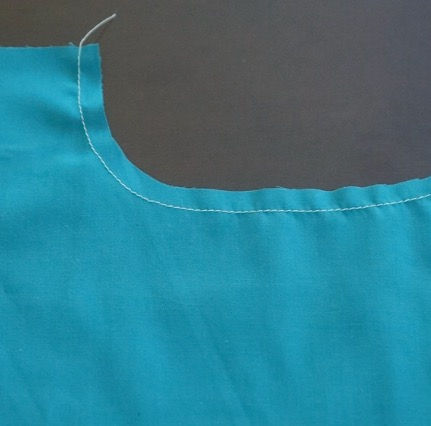
A stay stitch is one of those techniques that flies under the radar; you'll barely notice it once the garment is finished, but you'll definitely notice when you skip it. Simply put, a stay stitch is a single line of stitching sewn just inside the seam allowance of your fabric, before you begin constructing the garment. Its sole purpose? To hold the fabric in its original shape and prevent it from stretching or distorting as you work.
This is especially important when you're working with curved edges (hello, necklines and armholes!) or with fabrics that tend to have a bit of give. Once a curve is cut, it has a natural tendency to stretch out of shape with every touch, tug, and pin. A stay stitch locks it in place so your finished seam is smooth and clean.
When is it most useful? Stay stitching shines whenever you're working with:
✦ Knits & stretchy fabrics
✦ Delicate fabrics like silk, chiffon, or satin
✦ Bias-cut pieces
✦ Curved necklines or armholes
✦ Lightweight fabrics that shift easily
✦ Any seam you want to keep stable
How to sew a stay stitch:
Set your machine to a straight stitch with a slightly shorter stitch length than usual (about 1.5–2mm). This finer stitch holds more firmly and is less likely to cause the fabric to pucker.
Sew along the curved or straight edge you want to stabilize, positioning your stitches about ⅛ inch from the raw edge, within the seam allowance (not where the final seam will be).
Always stitch in the correct direction of the grain — on curved necklines, sew from the shoulder toward the center front and center back on each side to prevent the curve from distorting.
✦ PRO TIP
A stay stitch is your first line of defense—sew it immediately after cutting your fabric pieces, before you do anything else. Think of it as locking in your work before it can lose shape or unravel (literally).
One more thing: stay stitches are sewn within the seam allowance, meaning they'll be hidden inside the final seam. They're purely functional. Once the garment is sewn together, you'll never see them — but they'll have done their job quietly behind the scenes.
Under stitch
| The secret to a beautifully polished garment.
Understitching is what separates a homemade garment from one that looks professionally made. If you've ever sewn a facing onto a neckline, turned it to the inside, and had it stubbornly roll to the outside — understitching is the fix. It's a line of stitching that attaches the facing (or lining) to the seam allowance, so that it lays flat, stays tucked inside, and never peeks through to the right side.
Here's the key thing to understand: understitching is sewn on the facing side, not the garment side, and it's done through the facing and seam allowances only — not through to the fashion fabric. That means it's completely invisible from the outside of the finished garment. It's a hidden structural stitch that does a lot of quiet heavy lifting.
Where you'll use understitching most often:
✦ Necklines with facings
✦ Sleeveless armhole edges
✦ Waistbands
✦ Lined jackets & coats
✦ Plackets
✦ Anywhere facing meets garment
How to understitch:
Sew your facing to the garment along the seamline. Press the seam, then press both seam allowances toward the facing (away from the main garment).
With the facing right side up, stitch ⅛ inch from the seam line, catching the seam allowances underneath as you go. Use a straight or narrow zigzag stitch.
Press the facing to the inside of the garment and press well. Your neckline (or edge) should now roll perfectly to the inside and stay there.
✦ PRO TIP
After understitching, give the edge a good press with a tailor's ham or seam roll to really set the curve. And then — for that extra touch of professional polish — consider a topstitch along the edge too. The two techniques work beautifully together.
Understitching is a subtle but transformative technique. Once you start using it, you'll wonder how you ever sewed without it. Your facings will lie flat, your garments will look intentional, and your finishing will feel genuinely professional.
Top stitch
| Where function meets beautiful detail.

Topstitching is the most visible of the three techniques — and arguably the most fun. It's a line of stitching sewn on the right side of the garment, along a seam or edge, and it can do double duty: adding structural strength while also serving as a design detail. Think of the neat rows of stitching along the pockets of your jeans, the collar of a shirt, or the hem of a jacket. That's topstitching at work.
Unlike stay stitching and understitching, which are hidden helpers, topstitching is meant to be seen. And that's what makes it so wonderful — you can use it to express your personal style. A classic matching thread looks crisp and tailored; a bold contrasting thread turns a seam into a feature. The choice is entirely yours.
Why sewists reach for topstitching:
✦ To keep seams or hems flat
✦ To add decorative detail
✦ To reinforce high-stress seams
✦ To sharpen edges (collars, cuffs)
✦ To elevate a simple design
✦ To echo understitching on facings
How to topstitch:
Press the seam or edge you want to topstitch first — a well-pressed seam is the foundation of a beautiful topstitch. Use a seam roller or your iron on the correct heat setting for your fabric.
Lengthen your stitch slightly (2.5–3.5mm is typical for topstitching) so the stitches are visible and even. Thread your machine with topstitching thread or a heavier thread if you want a bolder look.
Stitch from the right side of the garment, using your presser foot edge or a seam guide to keep your line consistent. Common distances are ⅛", ¼", or even ½" from the edge, depending on the look you want.
✦ PRO TIP
A walking foot or edge-stitch foot makes topstitching significantly easier and more even—especially on thick fabrics or multiple layers. And if you love a double row of topstitching (so good on most twill fabrics like denim!), a twin needle gives you two perfectly parallel lines in a single pass.
A coverstitch machine can also give you very professional topstiching, especially on knit fabrics.
Topstitching is also a perfect finishing touch after understitching — once your facing is understitched and pressed, a line of topstitching right along the outer edge adds that final, polished detail that makes a garment look truly complete.
· · · ✦ · · ·
Stay stitch to stabilize, understitch to polish, and topstitch to shine. These three techniques work beautifully together and once you make them a natural part of your sewing process, you'll see a real difference in the quality and confidence of every garment you make. Save the quick reference guide above for your next project— and if you have questions, drop them in the comments below. I love hearing from you!
Comments